
Pussy willow
Salix discolorTypical peak: April
Possible shoulder: March–May
An early pollen and nectar resource; pollen supports brood rearing, while nectar availability depends on weather and willow plants.
Explore a month-by-month Maine pollinator forage and flowering guide, including red maple, pussy willow, clover, goldenrod and asters. These flowers may support native bees, butterflies, moths, flower flies, wasps or beetles, depending on the plant. Compare typical bloom periods around Ellsworth with recent community observations. Seasonal timing is a guide, not proof that a plant is flowering today.
Select a month to see plants in their typical peak or possible shoulder bloom around Ellsworth. Shoulder blooms are not guaranteed; weather and frost affect timing.
Nectar and pollen labels identify potential floral resources, not verified visits by every pollinator group. Bees may collect nectar and pollen; butterflies, moths, flies, wasps and beetles use different resources. Flower shape, season and weather influence access and actual use.
Typical peak: April
Possible shoulder: March–May
An early pollen and nectar resource; pollen supports brood rearing, while nectar availability depends on weather and willow plants.

Typical peak: April
Possible shoulder: May
Important early pollen, with nectar available when conditions allow bee flight.

Typical peak: May
Possible shoulder: April–September
Supplementary spring pollen and nectar, especially between tree bloom periods. Flowers may recur later in the season, but late blooms are sporadic rather than a reliable nectar flow.

Typical peak: May
Possible shoulder: June
Spring nectar and pollen; bee visits also help pollinate apple flowers.

Typical peak: June–August
Possible shoulder: September
A valuable summer nectar source, with pollen too; nectar production depends on warmth and moisture.
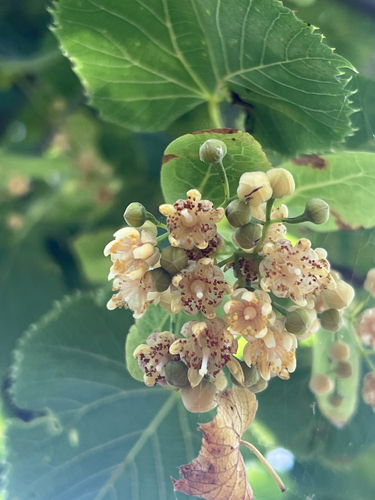
Typical peak: July
Possible shoulder: June
Can produce a strong but short nectar flow where mature trees are abundant; flowers also provide pollen.

Typical peak: July–August
Possible shoulder: None noted
Provides summer nectar and pollen where stands are plentiful, especially in open or disturbed areas.

Typical peak: August–September
Possible shoulder: July–October
A major late-season nectar and pollen source. Early October flowering is possible in mild years, but it is not dependable after frost.

Typical peak: September
Possible shoulder: August–October
Useful late-season pollen and nectar, sometimes persisting until hard frost.

Typical peak: May
Possible shoulder: April
Early spring pollen and nectar; flowering can overlap with willow and maple.
Photo source: Wikimedia Commons, Borealis55 (Public domain) ↗

Typical peak: May–June
Possible shoulder: April–June
Spring nectar and pollen; honey bees visit, while native bees can be especially effective pollinators.
Photo source: Wikimedia Commons, Gilles Ayotte / Université Laval (CC BY-SA 4.0) ↗

Typical peak: May–June
Possible shoulder: May–June
Clusters of spring flowers offer nectar and pollen when trees are blooming.
Photo source: Wikimedia Commons, Awinch1001 (CC BY-SA 4.0) ↗

Typical peak: June–July
Possible shoulder: May–August
Bramble blossoms can provide valuable early-summer nectar and pollen. August flowers, where present, are occasional rather than a dependable late-summer flow.
Photo source: Wikimedia Commons, Inhemska trädgården (CC BY-SA 4.0) ↗

Typical peak: June–August
Possible shoulder: June–September
Pollinator-friendly garden annual providing nectar and pollen over a long flowering period.

Typical peak: July–August
Possible shoulder: June–September
Open flower heads supply nectar and pollen to honey bees and other pollinators.
Plant status: Cultivated garden plant in Maine; not native to New England.
Photo source: Wikimedia Commons, Stan Shebs (See source license) ↗

Typical peak: July–September
Possible shoulder: June–September
When allowed to flower, this herb offers nectar and pollen and attracts many bees.

Typical peak: July–September
Possible shoulder: June–September
Native shrub with clusters of small flowers that attract bees from midsummer into early fall. University of Maine Extension documents nectar forage; pollen is not separately established in its forage list.

Typical peak: June–August
Possible shoulder: September
Common in Maine fields and roadsides. A documented nectar source, especially for long-tongued bees; honey bees may not always reach the nectar in its deep flowers.
Plant status: Introduced; naturalized across Maine.

Typical peak: March–April
Possible shoulder: March–April
Early-season pollen from garden bulbs when weather permits bee flight. March blooming and bee access depend on mild weather in coastal Maine.
Plant status: Introduced garden plant

Typical peak: May–June
Possible shoulder: April–June
Native spring flowers provide nectar and pollen for visiting bees and other flower-feeding insects.
Plant status: Maine native

Typical peak: June–July
Possible shoulder: May–July
Flowering culinary herb provides nectar; let some flower heads remain for visiting pollinators.
Plant status: Garden herb

Typical peak: July–September
Possible shoulder: June–September
Nectar-rich garden plant visited by honey bees and other pollinators.
Plant status: Cultivated garden plant; not documented as wild in Maine by Native Plant Trust

Typical peak: July–August
Possible shoulder: June–September
Nectar source particularly valuable to long-tongued pollinators; honey bee access varies.
Plant status: Native elsewhere in eastern North America; considered introduced in New England

Typical peak: June–August
Possible shoulder: June–September
Native biennial with nectar and pollen; evening-opening flowers also support moths.
Plant status: Maine native

Typical peak: June–August
Possible shoulder: May–September
Low-growing flowers provide nectar and pollen for various bees.
Plant status: Native status varies by subspecies

Typical peak: August–September
Possible shoulder: July–October
Introduced late-season wildflower that can provide nectar and pollen until frost. October bloom is possible in frost-free periods, not guaranteed.
Plant status: Introduced; not a native planting recommendation

Typical peak: March–April
Possible shoulder: March–April
Early garden bulbs can offer pollen and some nectar on warm days when honey bees can fly. March flowering and bee access depend on the weather.
Plant status: Introduced ornamental

Typical peak: September
Possible shoulder: August–October
Late-season nectar and pollen for honey bees and native bees; often found in moist places. October flowers are possible until hard frost.
Plant status: Native to Maine

Typical peak: September–October
Possible shoulder: August–October
Fall-blooming aster visited by honey bees and native bees before hard frost.
Plant status: Native in York County, Maine; introduced in some other Maine counties

Typical peak: September
Possible shoulder: August–October
Maine native fall-flowering aster of forest edges and openings. Offers late-season nectar and pollen to bees; October flowers depend on frost and weather.
Plant status: Native to Maine; not listed as state-rare.
Community reports from the last 30 days within approximately 25 km of Ellsworth. These are reported flowering observations, not verified pollinator visits or nectar flows.
Checking recent observations…
View nearby observations on iNaturalist ↗
Observation dates refer to when the plant was reported seen, not when the report was uploaded. The apiary's precise location is not used.
This coastal Maine seasonal guide uses University of Maine Cooperative Extension and pollinator-conservation resources as its starting point. Plants may provide nectar or pollen for different groups of pollinators; a pollen label does not mean every visitor collects pollen. Flower visits, nectar flows and successful pollination are distinct observations. Plant listings are not a recommendation to plant every species.
Native and non-native plants: Both may provide floral resources, but native plants are generally preferred when choosing new pollinator plantings. Butterfly and moth caterpillars may also need particular host plants, a separate benefit from adult nectar forage. Plants identified as invasive in Maine should not be planted or spread, even if pollinators visit their flowers.
UMaine: Wild Bee Conservation for Wild Blueberry Fields ↗
UMaine: Understanding Native Bees ↗
UMaine: Provide Food for Pollinators ↗
Selected photographs link to iNaturalist-hosted community images. Additional photographs are sourced from Wikimedia Commons, including public-domain and CC0 images; see the Wikimedia Commons file pages for source and licensing details.